

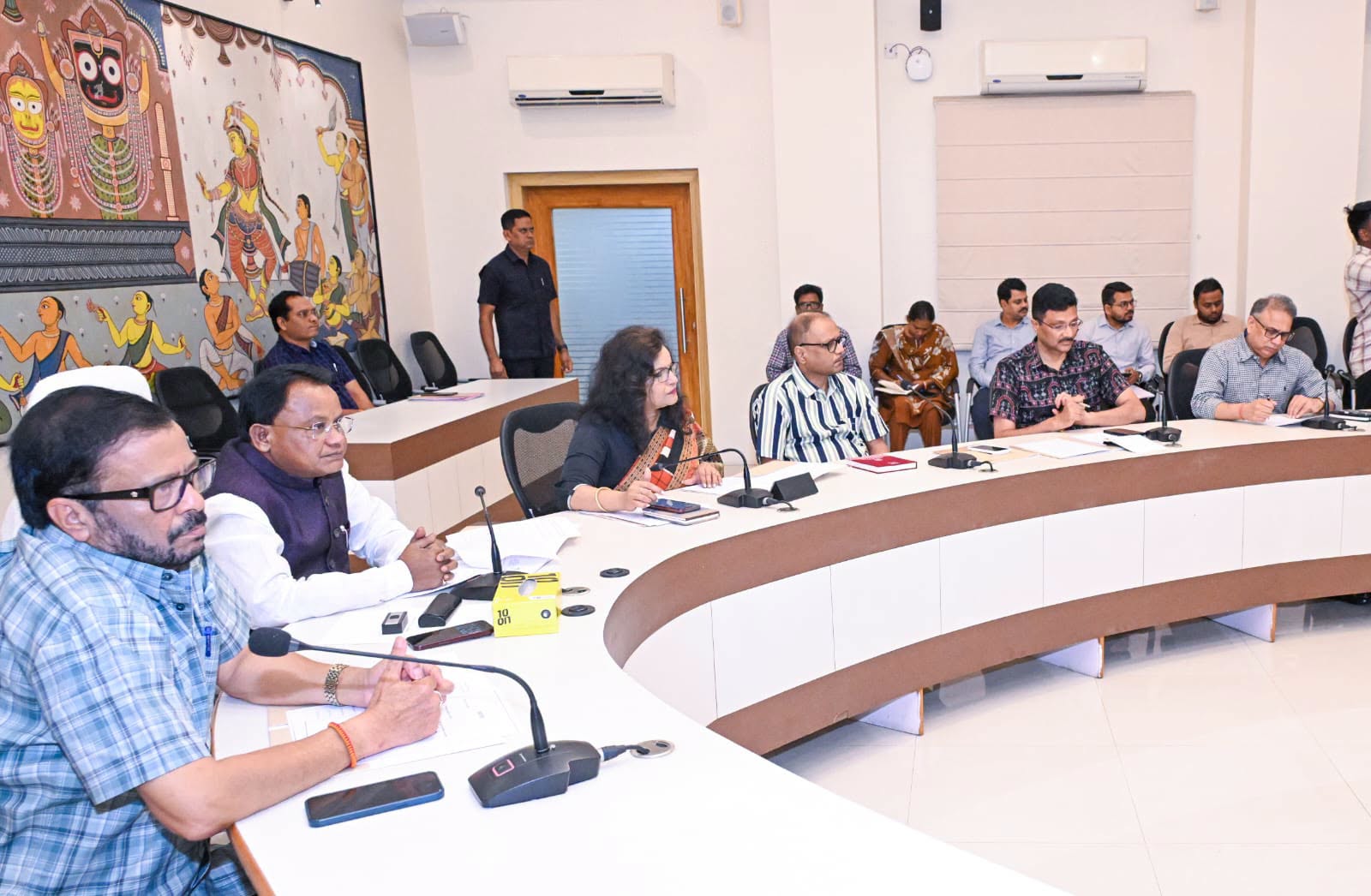
Bhubaneswar:25/10/26: Odisha Government and District Administrations across Ganjam, Gajapati, Rayagada, Koraput, and Malkangiri have put extensive preparations in place following the India Meteorological Department forecast of a cyclone landfall between South Odisha and North Andhra Pradesh on October 28. Under its impact, heavy to very heavy rainfall and high-speed winds are anticipated across various districts of the State, particularly in the southern region.
To prioritize public safety, schools, colleges, and Anganwadi centers in the five most vulnerable districts—Ganjam, Gajapati, Rayagada, Koraput, and Malkangiri—will remain closed on October 28 and 29. Leave for all district-level officers and staff has been cancelled, with strict instructions to remain present at their respective headquarters. Continuous monitoring is being maintained through 24/7 Control Rooms, including District Emergency Operation Centres, Block, Tehsil, and ULB units, supported by dedicated public helpline numbers and toll-free services.
Evacuation efforts are underway for residents living in katcha houses, thatched huts, and low-lying areas, who are being shifted to safe cyclone shelters equipped with essential amenities to support the State’s Zero Casualty objective. Expectant mothers nearing their delivery dates are being relocated in advance to nearby CHCs, PHCs, and hospitals, alongside special care and evacuation arrangements for senior citizens, children, and persons with disabilities.
High alerts have been issued across the five southern districts, backed by the deployment of 24 ODRAF teams and 6 NDRF teams. Tactical response assets are distributed with 11 teams in Ganjam (9 ODRAF and 2 NDRF), 7 teams in Gajapati (6 ODRAF and 1 NDRF), 4 teams in Rayagada (3 ODRAF and 1 NDRF), 4 teams in Koraput (3 ODRAF and 1 NDRF), and 4 teams in Malkangiri (3 ODRAF and 1 NDRF).
Strict precautionary restrictions have been enforced, including a complete ban on sea fishing activities and tourist entry to hills, waterfalls, dams, and scenic destinations across the five districts. The Agriculture Department has urged farmers to harvest and safely store paddy, maize, ragi, and other crops that are 80 to 85 percent mature, establishing dedicated agricultural helplines for guidance.
Health infrastructure preparations involve water chlorination, stockpiling essential medical supplies such as snake antivenom and chlorine tablets, and pre-positioning equipment for swift power and telecom restoration. Provisions are also active for livestock protection, including shifting animals to safer grounds, providing veterinary treatment through Mobile Veterinary Units, and distributing feed. Nodal officers connected via real-time communication groups are overseeing vulnerable sectors, while citizens are advised to disregard rumors and follow official guidance.