
Your Highness,
Excellencies,
Namaskar!
It gives me immense pleasure to welcome and greet you all to India.
India’s BRICS Chairship is guided by a people-centric and humanity-first approach. Resilience, Innovation, Cooperation, and Sustainability have been our key priorities. With these priorities in mind, we have placed special emphasis on making BRICS cooperation more closely connected with the lives of ordinary people.
With this vision in mind, more than 350 meetings were organised. We had the opportunity to welcome your teams in nearly 30 cities across India. I sincerely thank each one of you for your active contribution and support in making India’s BRICS Chairship a success.
Friends,
This year’s BRICS Summit marks a historic milestone. We are celebrating the 20th anniversary of BRICS. In human life, the age of twenty marks the beginning of a new phase of maturity and responsibility. It is a stage when dreams are accompanied by responsibilities, and capabilities are channelled in new directions.
Today, BRICS too stands at a ‘coming of age’ moment. Over the past twenty years, BRICS has established a distinct identity for itself on the global stage. We respect each other’s perspectives and move forward through consensus. We strive to move ahead with an approach that is not against anyone but instead seeks to take everyone along.
It is now time for us to translate our unity and consensus within BRICS into concrete outcomes on the global stage. For the next twenty years, we must work on a new and ambitious agenda. We must begin by strengthening our own working systems.
The BRICS Chairship changes every year, but this should not interrupt our institutional momentum. I propose the establishment of a BRICS Continuity and Implementation Mechanism. Through the Troika, this mechanism will ensure systematic follow-up on all initiatives and outcomes.
We can create a secure digital repository in which, for every decision, the nodal point, timeline, and implementation status can be recorded.
Friends,
While strengthening BRICS, we must also chart the course for global reform. The current structure of global governance resembles a pyramid. At the top, power and decision-making are concentrated, while at the bottom are countries that are affected by these decisions but have little say in shaping them.
The Global South is today in the front row of global crises, but in the back row of decision-making. We must transform this “pyramid of privilege” into a “platform of partnership”, where every country has a voice, every member has a stake, and the advancement of humanity remains at the heart of every endeavour.
With this objective, I propose that we work together to formulate ten proposals for global governance reform, which we could seek to develop into a BRICS Reform Roadmap by the next Summit.
In preparing this roadmap, we must keep three key aspects in mind: Representation, Responsiveness, and Rule-making.
First, with regard to Representation, I would like to say that reform of the UN Security Council can no longer be delayed. The text-based negotiations on this issue must be linked to a clearly defined timeline and concrete outcomes.
Similarly, in financial institutions, voting power, leadership positions, and policy priorities should reflect today’s economic realities. Countries that drive global economic growth should also have an appropriate role in shaping global economic governance.
Second, Responsiveness. Global institutions will earn the trust of humanity only when they are able to provide effective solutions to global challenges. We must focus on the speed, scale, and last-mile impact of our collective response.
Seafarers make a very significant contribution to global trade, yet they often find themselves without adequate support during times of difficulty. I propose that we can establish a Seafarers Emergency Support Network. This network could connect the Maritime authorities and missions of the countries concerned. It could facilitate distress alerts, medical assistance, communication with families, and support for evacuation.
And third, I would like to speak about rule-making. Ensuring equal participation in shaping the global rules of the future is of utmost importance.
AI, cyberspace, outer space, biotechnology, and critical technologies are shaping not only the opportunities of the future, but also the rules that will govern the future.
We must work to transform the Global South from rule-takers into rule-shapers. Through BRICS, we can provide young diplomats and policymakers from the countries of the Global South with negotiation skills, practical training, and legal expertise.
By a happy coincidence, today is the United Nations Day for South-South Cooperation. It is especially significant that such a decision is being taken on a day dedicated to the Global South. India is ready to take the lead on this issue.
Friends,
The message of the BRICS Summit being hosted by India should be loud and clear: If our future is shared, then the right to shape that future must also be shared.
From voice to impact. From privilege to partnership.
This should be the resolve of BRICS at 20.
Thank you very much.
DISCLAIMER: This is the approximate translation of Prime Minister's address. The original address was delivered in Hindi.
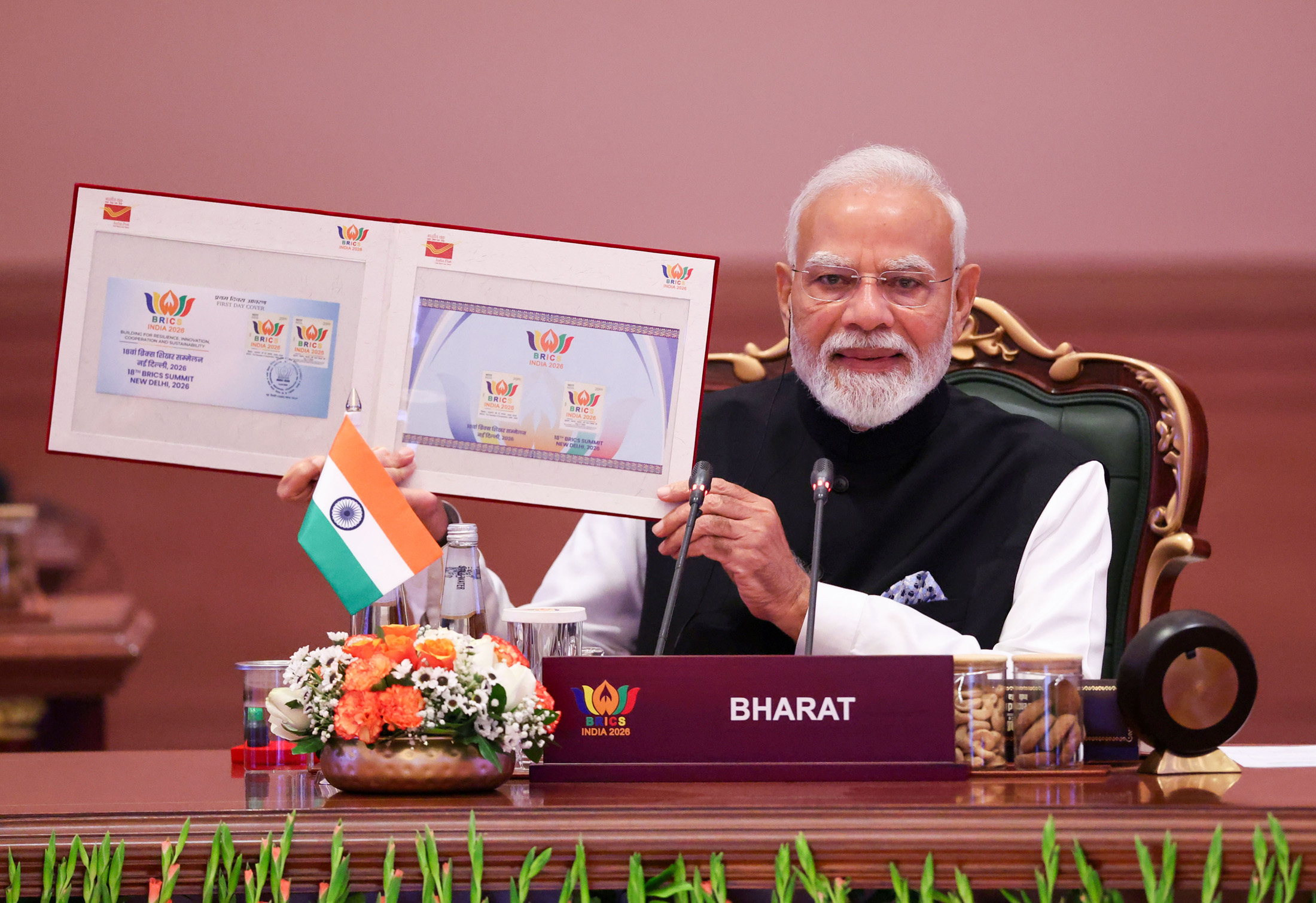
Opening Remarks by the Prime Minister during the 18th BRICS Summit Session
ˇ