

Bhubaneswar:20/11/26: Odisha has
initiated plans to adopt an Agri-Photovoltaics (Agri-PV) Policy alongside
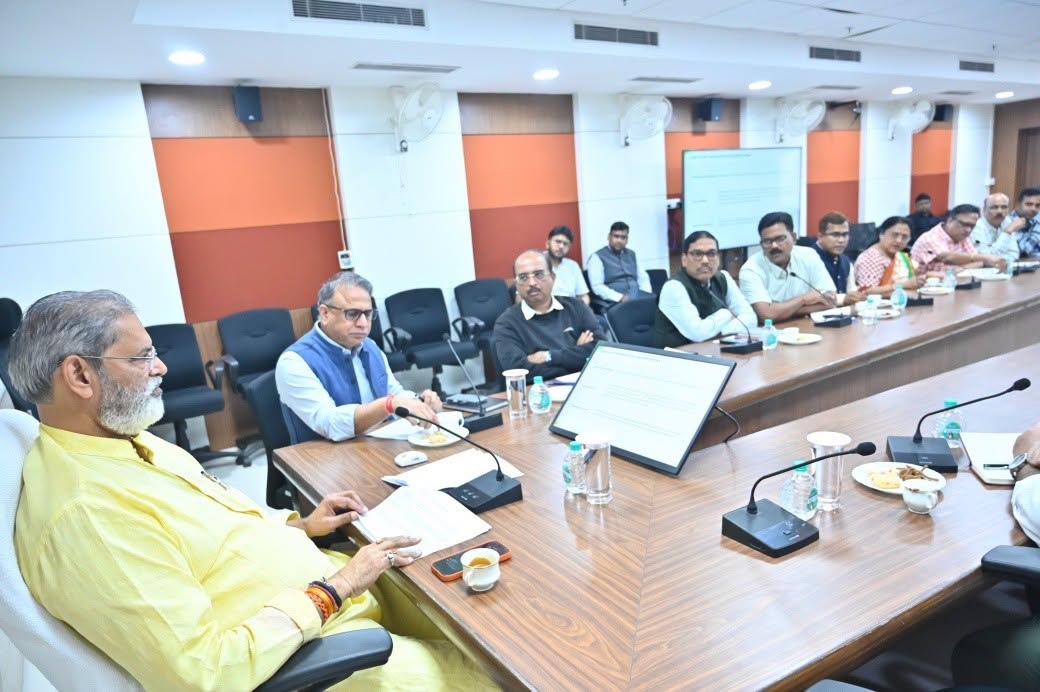
upcoming pilot initiatives following a high-level review meeting held today at
Lok Seva Bhawan.
Chaired
by Hon’ble Deputy Chief Minister and Minister of Agriculture & Farmers’
Empowerment and Energy, Shri Kanak Vardhan Singh Deo, the deliberations
centered on integrating solar power generation with sustainable farming
practices. The overarching goal of this initiative is to maximize land
productivity, strengthen climate resilience, and create supplementary income
streams for farmers across the state. The proposed pilot projects will focus on optimized power
generation, efficient crop management, disaster-resilient infrastructure, and
long-term capacity building for our farmers. Odisha is taking decisive steps to
ensure that the benefits of the green energy transition reach every farming household.
Additional
Chief Secretary, Energy and E&IT, Shri Vishal Kumar Dev;
Commissioner-cum-Secretary Agriculture & Farmers’ Empowerment, Shri Sachin
Ramchandra Jadhav; Managing Director of GRIDCO, Dr. Satyapriya Rath; and
Director of Horticulture, Shri Chakravartti Singh Rathore attended the meeting.
Addressing
the officials, Deputy Chief Minister, Shri Singh Deo, underscored the
transformative potential of dual-use land models for Odisha’s agrarian economy.
He noted that Agri-Photovoltaics represents a forward-looking convergence of
clean energy and sustainable agriculture. By enabling farmers to simultaneously
cultivate crops and generate solar energy on the same tract of land, the state
aims to build resilient, future-ready rural livelihoods while accelerating its
transition toward green energy.
As part
of the rollout strategy, four pilot projects are currently in the pipeline
under the proposed Agri-PV framework. These initiatives are being designed
around three core pillars: optimizing solar power generation, ensuring
effective crop management beneath and around the installations, and
incorporating disaster-resilient infrastructure capable of withstanding
Odisha’s extreme weather events.
Beyond technical design, the meeting examined the operational and financial mechanisms required for sustainable livelihood enhancement. Officials evaluated projected installation costs and explored frameworks to guarantee steady, reliable income for participating landowners. To ensure long-term success at the grassroots level, the discussions also outlined a structured capacity-building program that will provide two years of dedicated training to farmers.