 Odisha news today, Latest Oriya News Bhubaneswar Online Odia news Portal
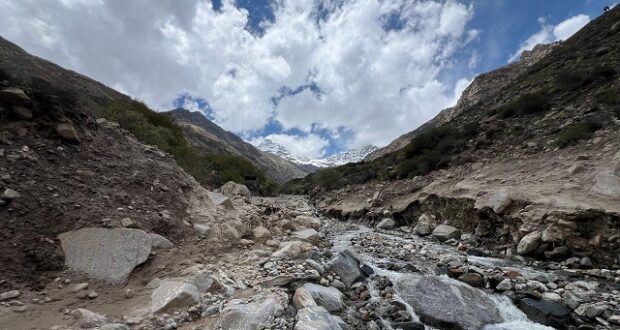
Bhubaneswar, 3rd October 2025: A new study published in Communications Earth & Environment highlights the underestimated risks posed by small lakes in mountain regions, exemplified by a destructive flood event in Nepal’s Limi Valley.
On May 15, 2025, the remote village of Til in Northwestern Nepal was hit by a sudden debris-laden flood, which swept away vital infrastructure, including a recently constructed 15 kW hydropower plant, bridges, roads, and nearly 0.25 km² of farmland. The flood also destabilized riverbanks, preconditioning further hazards in the valley.
The study emphasizes that small, high-mountain lakes, often overlooked in comparison to large glacial lakes, have the potential to cause severe disasters when they suddenly drain. The authors argue that such events are frequently mischaracterized or underestimated in risk assessments, leading to gaps in disaster preparedness.
“Even small lakes in mountain regions can trigger cascading hazards with long-term consequences for local communities,” said lead author Dr. Ashim Sattar, Assistant Professor, IIT Bhubaneswar. “It is vital that these risks are recognized and systematically integrated into existing disaster risk reduction frameworks,” remarked Dr. Adam Emmer, Charles University, Prague.
The study calls for the recognition and monitoring of risks associated with small lakes in the Himalaya and other high-mountain regions, urging policymakers, scientists, and disaster management agencies to incorporate them in the current approaches to risk assessment.“It is important to bridge the gap between science and society for effective management of such disasters,” says Tashi Lhazom. The authors underscore the urgent need for revised hazard perception and improved disaster resilience strategies of mountain communities, where small lakes are often neglected in planning but can cause disproportionately large loss and damage.
“The Himalaya has many small lakes in the higher reaches,” says Dr. Sattar. “However, these conditions and processes are not only localised in High Mountain Asia, but other glacierized mountain ranges, such as the Andes, highlighting the global dimension of this topic,” adds Dr. Emmer. Therefore, effective decision-making and sustainable governance need to consider small lakes that can threaten vulnerable downstream communities with limited resilience and coping capacity. “It’s high time for science-based planning, strict policies, early warning systems, and community preparedness—before the next small lake outburst becomes another Himalayan tragedy,” says Dr. Mohd Farooq Azam, ICIMOD.