 Odisha news today, Latest Oriya News Bhubaneswar Online Odia news Portal
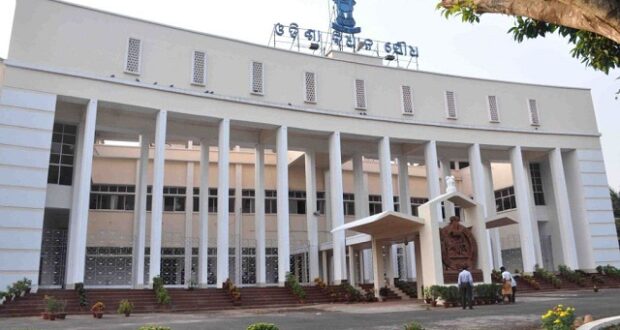
Bhubaneswar:4/6/26: The Odisha Legislative Assembly stands out as an exception to the broader trend of shrinking legislative sittings across Indian states.
According to an analysis by Yashika Kedia of PRS Legislative Research, the Odisha House has consistently outpaced the national average for sitting days over at least the last four consecutive years.
In 2025, the Odisha Legislative Assembly met for 43 days, securing the highest number of sitting days among all states, a position it also held in 2024 when it met for 42 days. This is particularly notable when compared to the national average, where state assemblies met for an average of just 24 days in 2025.
Despite the high number of sitting days, a gap remains between the actual daily duration of sittings and the targets set by the legislature’s own rules. On average, a sitting of the Odisha Legislative Assembly lasted for 5 hours, whereas the Rules of Procedure for the Assembly prescribe a daily sitting duration of 6.5 hours.
When it comes to the budget, Odisha House dedicated significant time to fiscal scrutiny. While states on average spent eight days discussing their annual budget, Odisha House allocated 15 days to budget discussions.
This contrast highlights differing state practices in budget review. For instance, following the parliamentary convention where houses recess for three to four weeks to allow Subject Committees to examine and report on ministerial budgets, states like Haryana and Kerala utilized their Subject Committees for this purpose.
Furthermore, in 2025, Haryana, Goa, and Tamil Nadu Legislative Assemblies discussed the budgets of all departments before voting. However, the depth of these debates varied wildly: Haryana concluded its departmental budget discussions in a single day, while Tamil Nadu House spent 23 days on the process.
In terms of legislative output, the Odisha Legislative Assembly passed 5 Bills in 2025. The time taken to pass these pieces of legislation showed some variation: 2 Bills were passed within a single day of introduction, 2 Bills took between 2 and 5 days, and 1 Bill took more than 5 days. This reflects a relatively more measured approach than some peers; across the country, 7 Assemblies passed all of their Bills within a single day of introduction. Karnataka, for example, rushed through legislation by passing 17 Bills in one sitting and 12 in another.
The legislative focus in Odisha House during this period covered land rights, regulatory easing, and labor reforms. The Assembly amended the Prevention of Land Encroachment Act, 1972, extending legal protections to vulnerable individuals who own homestead land measuring less than one-twenty-fifth of an acre. In line with federal efforts to improve the ease of doing business, the state enacted decriminalization measures modeled after the central Jan Vishwas Act. Finally, updates were made to the state’s Shops and Establishment Acts, which modernized labor regulations by allowing women workers to work night shifts and raising the quarterly limits for permissible overtime work.