 Odisha news today, Latest Oriya News Bhubaneswar Online Odia news Portal
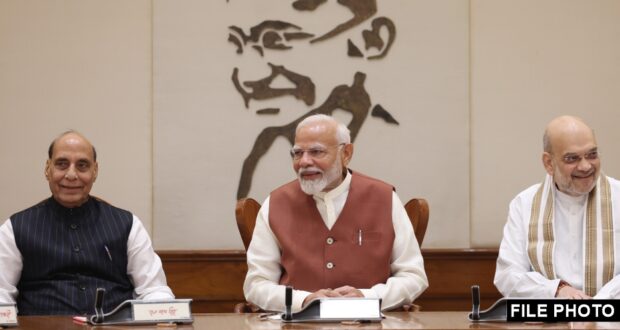
Newdelhi;10/3/26; The Union Cabinet, chaired by Prime Minister Shri Narendra Modi, has approva ed change in guidelines on investments from countries sharing land border with India (LBCs).
The existing policy has been reviewed and amended as follows:
- Incorporation of the definition and criteria for the determination of ‘Beneficial Owner’ (BO) –
The amendment provides a definition and criteria for determining Beneficial Ownership, which are widely used by the investing community under the Prevention of Money Laundering Rules, 2005.
The Beneficial Ownership test shall be applied at the level of the investor entity.
Investors with non-controlling LBC Beneficial Ownership of up to 10 percent shall be permitted under the automatic route as per the applicable sectoral caps, entry routes, and attendant conditions. Such investments shall be subject to the investee entity reporting relevant information and details to DPIIT.
- Expedited clearance of investments in specific sectors –
Proposals for LBC investments in specified sectors/activities of manufacturing in capital goods, electronic capital goods, electronic components, polysilicon, and ingot-wafers shall be processed and decided within 60 days.
CoS under the Cabinet Secretary may also revise the list of specified sectors.
In these cases, the majority shareholding and control of the Investee entity will be with resident Indian citizen(s) and/or resident Indian entity(ies) owned and controlled by resident Indian citizen(s), at all times.
Background
In order to curb opportunistic takeovers/acquisitions of Indian companies due to the COVID-19 pandemic, the Government had amended the extant FDI Policy vide Press Note 3(2020) dated 17.04.2020 (PN3). Pursuant to PN3, an entity of a country wthatshares land border with India or where the beneficial owner of an investment into India is situated in or is a citizen of any such country, can invest only under the Government route. Additionally, any transfer of ownership of any existing or future FDI in an entity in India resulting in the beneficial ownership falling within the aforesaid jurisdiction(s) also requires government approval.
Applicability of PN3 restrictions to cases where LBC investors may have only non-strategic, non-controlling interests was seen as adversely affecting investment flows from investors, including global funds such as PE/ VC funds.
Benefits:
It is expected that the new guidelines will provide clarity and ease of doing business in India, and facilitate investments that can contribute towards greater FDI inflows, access to new technologies, domestic value addition, expansion of domestic firms, and integration with the global supply chain. This would help in leveraging and enhancing India’s competitiveness as a preferred investment and manufacturing destination. Increased FDI inflows would supplement domestic capital, support the objectives of Atmanirbhar Bharat, and accelerate overall economic growth.